
Books that teach you to read a company and read a chart.
Fundamental analysis asks what a company is worth. Technical analysis asks what its price is doing. Serious investors learn both. These 31 titles are the ones worth your time, ordered so you can start at the top of each list and work down.
A note before you buy anything. Every book here was written about the US market. The methods carry over to NEPSE; the tax rules, settlement cycle, circuit limits and disclosure standards do not. Read them for the thinking, then apply it with Nepal’s rules in mind.
What you can actually do with each book:
- Read free here (10). Out of copyright. The complete text is stored on this site and opens in the reader — no account, no other website.
- Borrow (10) or print-disabled only (5). A library scan exists elsewhere. Print-disabled access is restricted to readers with a qualifying disability.
- Buy or borrow (6). Still in copyright with no online copy, so we cannot host it.
These are real availability figures, not estimates. Every page on this site — covers, text and details — is served from our own server; nothing loads from another website.
Fundamental analysis
Understanding what a business is worth
These books teach you to read an annual report, judge management, and decide what a share is actually worth before you look at its price.
The Money Market
F. Straker · 1904
How short-term money moves between banks and why its price matters to everything else. Useful background for a market where interest rates drive most of the index.
Out of copyright. The complete text is on this site.
Read it now→
Lombard Street: A Description of the Money Market
Walter Bagehot · 1873
The book that explained how a central bank should behave in a panic, and still the clearest account of why credit dries up all at once. Relevant anywhere banks dominate the market, which is to say NEPSE.
Out of copyright. The complete text is on this site.
Read it now→
The Story of the Bank of England
Henry Warren · 1903
How a central bank came to exist and what problems it was invented to solve — the questions NRB answers for Nepal.
Out of copyright. The complete text is on this site.
Read it now→
The Stock Exchange
Charles Duguid · 1904
A short, plain introduction to what a stock exchange is and how business is done on it. Dated in detail, but the structure it describes is the one NEPSE still uses.
Out of copyright. The complete text is on this site.
Read it now→
The Stock Exchange from Within
William C. Van Antwerp · 1913
A member's account of how an exchange actually functions day to day — orders, members, settlement — written before any of it was automated, which makes the mechanics unusually visible.
Out of copyright. The complete text is on this site.
Read it now→
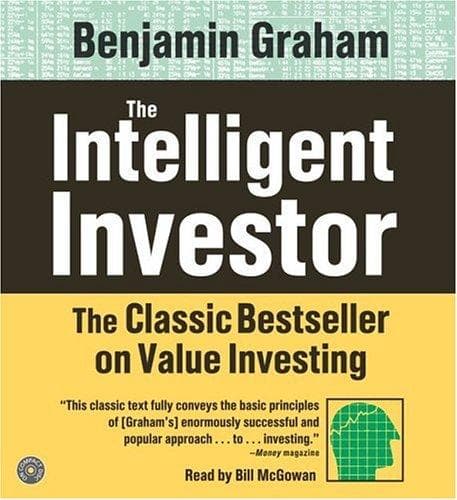
The Intelligent Investor
Benjamin Graham · 1949 · 352 pages
The book that separates investing from speculating. Start here if you want a temperament that survives a falling market.
Lendable from the Internet Archive with a free account.
Book details→

One Up On Wall Street
Peter Lynch · 1989 · 318 pages
Argues that an ordinary investor can spot good companies in everyday life before the analysts do. The friendliest entry point on this list.
Lendable from the Internet Archive with a free account.
Book details→
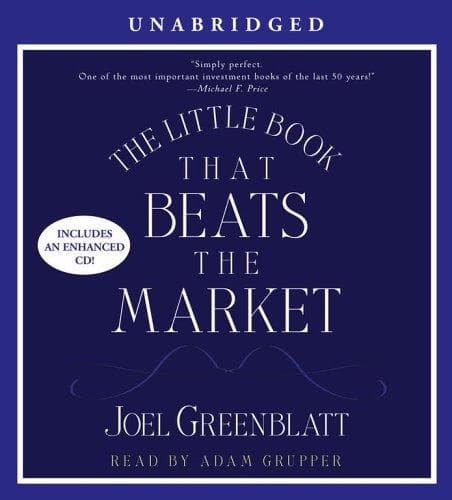
The Little Book That Beats the Market
Joel Greenblatt · 2005 · 176 pages
Reduces stock picking to two questions: is the business good, and is it cheap. Short, and unusually clear on why the two must go together.
No online copy. Ask a library or bookseller for a copy.
Book details→
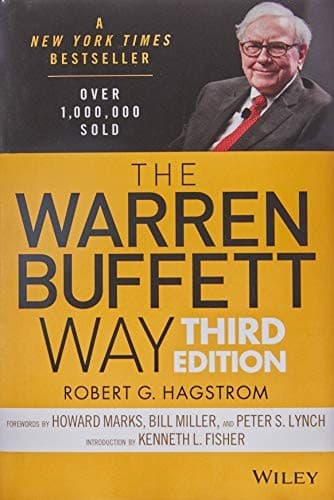
The Warren Buffett Way
Robert Hagstrom · 2004 · 320 pages
Works backwards from Buffett's actual purchases to the reasoning behind them. Useful for seeing how the theory is applied to a real company.
No online copy. Ask a library or bookseller for a copy.
Book details→
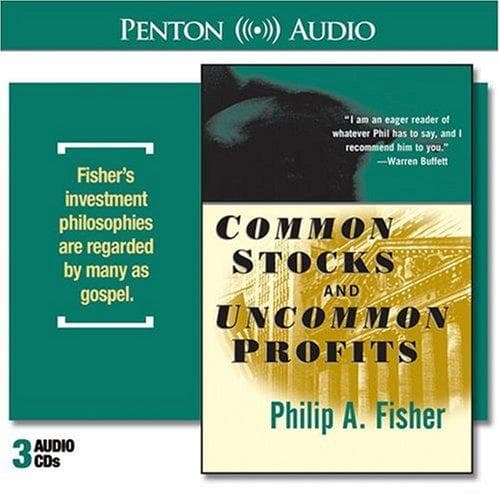
Common Stocks and Uncommon Profits
Philip Fisher · 2000 · 4 pages
Focuses on judging management quality and durability rather than the balance sheet alone — the qualitative half of fundamental analysis.
No online copy. Ask a library or bookseller for a copy.
Book details→
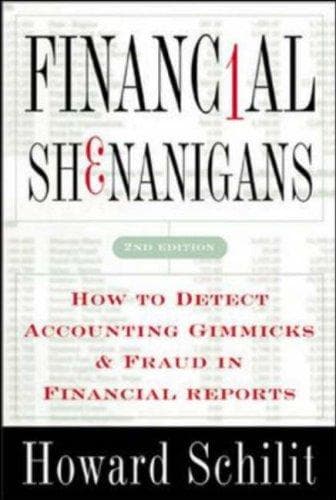
Financial Shenanigans
Howard Schilit · 2002 · 240 pages
A catalogue of the tricks companies use to flatter their accounts, and how to catch them. Directly useful when reading a NEPSE-listed company's report.
No online copy. Ask a library or bookseller for a copy.
Book details→

Security Analysis
Benjamin Graham and David Dodd · 1934 · 766 pages
The 1934 foundation text of the whole discipline. Dense and demanding — read The Intelligent Investor first.
Lendable from the Internet Archive with a free account.
Book details→
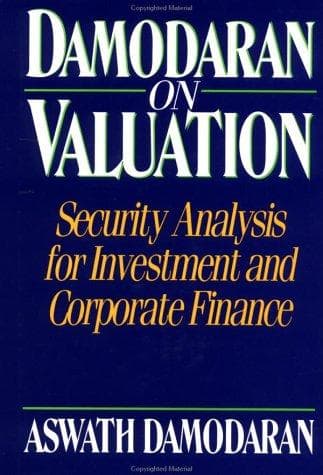
Damodaran on Valuation
Aswath Damodaran · 1994 · 561 pages
The reference for putting an actual number on a business. Heavy on method, and the standard text once you are past ratios.
A scan exists but access is limited to readers with a qualifying print disability.
Book details→

Extraordinary Popular Delusions and the Madness of Crowds
Charles Mackay · 1841 · 724 pages
The 1841 account of the South Sea Bubble and tulip mania. Read the money chapters and you will recognise every pump group operating in Nepal today.
Out of copyright. The complete text is on this site.
Read it now→
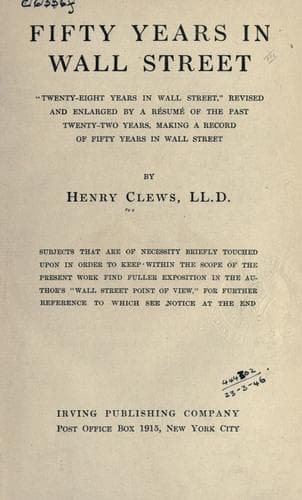
Fifty Years in Wall Street
Henry Clews · 1908 · 1062 pages
A banker's first-hand record of panics, corners and manias from the 1850s onward. Long, but the chapters on panic behaviour are worth it.
Out of copyright. The complete text is on this site.
Read it now→
Technical analysis
Reading price, trend and volume
These books teach you to read charts: trend, support and resistance, candlesticks, volume and the patterns that repeat because human behaviour repeats.
Studies in Tape Reading
Richard D. Wyckoff · 1910
The origin of reading a market by watching what large operators actually do rather than what commentators say. Everything sold today as 'smart money' analysis descends from this book — and unlike the modern courses, it is out of copyright and readable here in full.
Out of copyright. The complete PDF is on this site.
Download it→
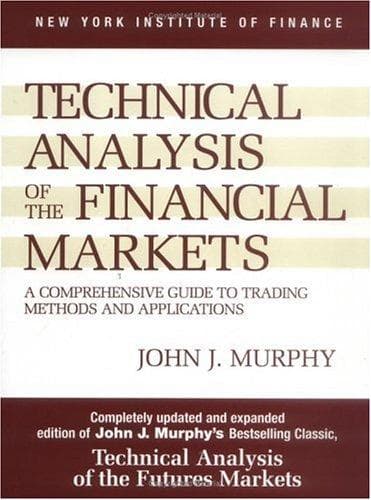
Technical Analysis of the Financial Markets
John J. Murphy · 1999 · 559 pages
The standard textbook. Trends, support and resistance, volume and the major chart patterns, explained in order and with real charts.
No online copy. Ask a library or bookseller for a copy.
Book details→
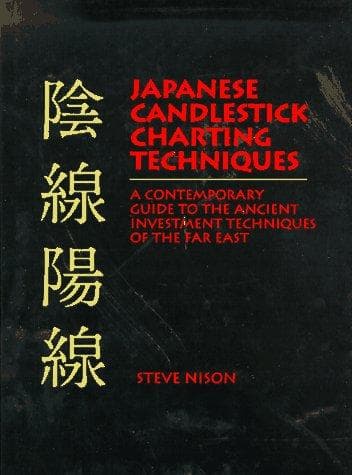
Japanese Candlestick Charting Techniques
Steve Nison · 1991 · 307 pages
The book that brought candlesticks to the West. Read it once and the daily NEPSE price screen stops looking like noise.
A scan exists but access is limited to readers with a qualifying print disability.
Book details→
How to Make Money in Stocks
William J. O'Neil · 1988 · 269 pages
Blends chart timing with earnings screens. Best read as an argument for having written rules before you buy.
A scan exists but access is limited to readers with a qualifying print disability.
Book details→

Trading for a Living
Alexander Elder · 1993 · 289 pages
Gives equal weight to method, money management and psychology. The chapters on risk per trade matter more than the indicators.
A scan exists but access is limited to readers with a qualifying print disability.
Book details→
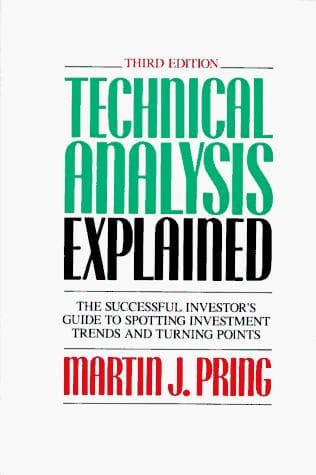
Technical Analysis Explained
Martin J. Pring · 1980 · 521 pages
Broader and more sceptical than most. Good on what indicators actually measure and where they fail.
Lendable from the Internet Archive with a free account.
Book details→
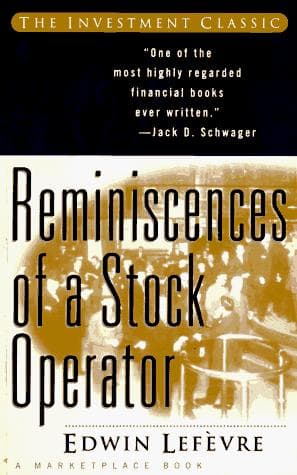
Reminiscences of a Stock Operator
Edwin Lefevre · 1923 · 273 pages
A 1923 trading memoir that is still quoted because the crowd behaviour it describes has not changed. Read it for discipline, not technique.
Out of copyright. The complete text is on this site.
Read it now→
Market Wizards
Jack D. Schwager · 1993 · 458 pages
Interviews with traders who use contradictory methods and still win. The shared thread is risk control, which is the actual lesson.
A scan exists but access is limited to readers with a qualifying print disability.
Book details→
Encyclopedia of Chart Patterns
Thomas Bulkowski · 2000 · 1040 pages
A reference, not a read-through. Each pattern is measured statistically, including how often it fails — rare honesty in this field.
Availability is not recorded for this edition.
Book details→

Psychology of the Stock Market
G. C. Selden · 1912 · 108 pages
From 1912, and the reason it survives is that it is about people, not prices. Short enough to read in an evening, and the crowd it describes is the same one on NEPSE today.
Out of copyright. The complete text is on this site.
Read it now→
The Psychology of Speculation
Henry Howard Harper · 1926 · 106 pages
On why disciplined people abandon their own rules once money is on the line. The most useful thing a new investor can read before their first trade.
Out of copyright. The complete text is on this site.
Read it now→
Foundations
The statistics and economics the rest of it assumes
Complete university textbooks, downloadable in full from this site. Every book above was written about markets; these are about the things a market book takes for granted — what a standard deviation is, why a business has pricing power or does not, what an interest rate decision does. Published by OpenStax under a Creative Commons Attribution licence, which is what lets us host them here.

Introductory Business Statistics
Alexander Holmes, Barbara Illowsky, Susan Dean, Kevin Hadley · 2017
The book to reach for when a lesson here uses a statistical term and assumes you have it. Standard deviation, distributions, sampling, confidence intervals, correlation and regression, all worked through with business data. Chapter 6 on the normal distribution is the one that makes the warning in our volatility lesson make sense: two standard deviations only covers 95% of outcomes if the data is actually normal, and market returns are not.
Openly licensed. The complete PDF is on this site.
Download it→

Principles of Microeconomics 2e
Cynthia Gamez, Andres Jauregui, Diane Keenan, Dan MacDonald, Amyaz Moledina, Craig Richardson, Ralph Sonenshine, Steven A. Greenlaw, Eric Dodge, David Shapiro · 2017
Supply, demand, elasticity, cost structures, competition and market power. This is the machinery underneath company analysis: why a hydropower firm with a signed power purchase agreement has a different cost and revenue shape from a bank, and why a business with no pricing power cannot protect a margin however well it is run.
Openly licensed. The complete PDF is on this site.
Download it→

Principles of Macroeconomics 2e
Eric Dodge, Cynthia Gamez, Andres Jauregui, Diane Keenan, Steven A. Greenlaw, David Shapiro, Dan MacDonald, Amyaz Moledina, Craig Richardson, Ralph Sonenshine · 2017
Inflation, interest rates, growth, money supply, exchange rates and the balance of payments. Read it alongside Nepal Rastra Bank's own publications in the official sources section — NRB's policy rate decisions move the banking sector, which is the largest part of NEPSE by market capitalisation.
Openly licensed. The complete PDF is on this site.
Download it→

Principles of Economics 2e
Steven A. Greenlaw, David Shapiro, Eric Dodge, Cynthia Gamez, Andres Jauregui, Diane Keenan, Craig Richardson, Ralph Sonenshine, Dan MacDonald, Amyaz Moledina · 2017
Micro and macro in one volume. Take this instead of the two separate books if you want a single sweep rather than two deep ones — the content overlaps heavily, so there is no reason to read all three.
Openly licensed. The complete PDF is on this site.
Download it→
Introduction to Business
Lawrence J. Gitman, Carl McDaniel, Amit Shah, Monique Reece, Linda Koffel, Bethann Talsma, James C. Hyatt · 2018
What a company is and how one is actually run: forms of ownership, management, operations, marketing, and how a business is financed. Useful before the financial-statement chapters, because a balance sheet is much easier to read once you know what the business behind it does all day.
Openly licensed. The complete PDF is on this site.
Download it→
Reading is half of it. Practice is the other half.
Every chart pattern and ratio in these books can be tried on live NEPSE data, free, on NepseTrading.
Open Live NEPSE Charts →